Fajarasia.co – Indonesian Ambassador to Bangladesh Heru Hartanto Subolo said he was ready to carry out his duties as ambassador and increase bilateral economic cooperation between Indonesia and Bangladesh.
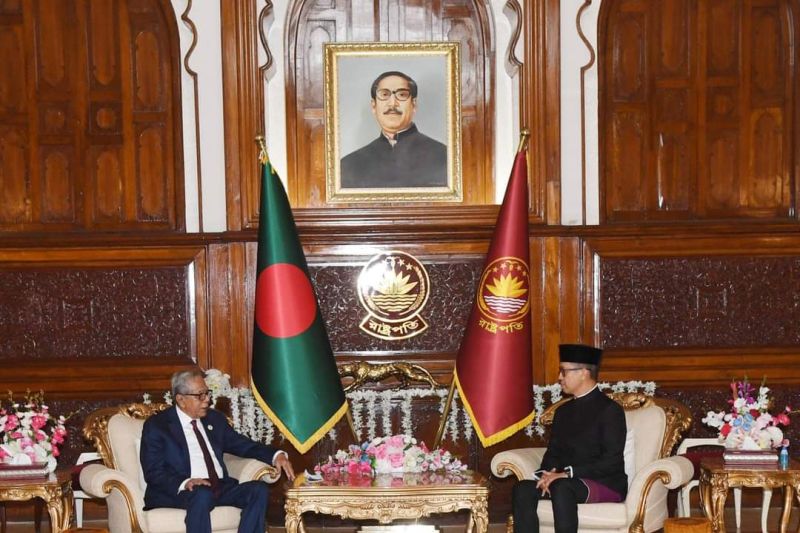
This statement was made by Heru when he handed over the credentials to Bangladesh President Abdul Hamid, according to a written statement from the Indonesian Embassy in Dhaka received in Jakarta, Monday (30/5/2022).
He admitted that he was very enthusiastic to carry out the vision and mission carried out during his tenure in Bangladesh and Nepal, namely strengthening economic diplomacy to encourage national economic recovery.
He mentioned several economic diplomacy efforts that are being carried out, including the completion of the Indonesia-Bangladesh Preferential Trade Agreement (PTA), encouraging the realization of Indonesian BUMN business deals in the Bangladesh energy sector through the realization of the PT Pertamina Power Indonesia (PPI) and PT Pembangkit projects. Java Bali (PJB), as well as increasing market access for strategic products and Indonesia’s leading commodities.
Bangladesh is Indonesia’s 3rd largest trading partner in the South Asian region and Indonesia enjoys a significant surplus.
Bangladesh is a market for strategic industries and exports of Indonesia’s leading products, including train cars made by PT INKA, buses and palm oil.
The country is one of the potential non-traditional markets for increasing Indonesian exports.
This is evidenced by the increase in the volume of bilateral trade between the two countries, which soared from US$1.76 billion in 2020 to US$3.03 billion (Rp44.16 trillion) in 2021, according to a statement from the Indonesian Embassy in Dhaka.
Bangladesh is also a country with a population of around 162 million, 7 percent of whom are upper middle class.
The upper middle class in Bangladesh in 2025 is predicted to reach 20 percent of the total population or around 40 million people. The country is targeted to become a developing country by 2026.
Bangladesh’s economic growth is quite high and stable. Since 2011, the average economic growth is above 6.8 percent.
Even before the pandemic, Bangladesh’s economic growth reached 8.2 percent in 2019. In 2020, its economic growth reached 8 percent.
Considering these facts, according to the Indonesian Embassy in Dhaka, Indonesia needs to become Bangladesh’s main partner and take advantage of the country’s ongoing economic growth and development momentum.
The COVID-19 pandemic has affected Bangladesh’s economic growth. Nearly 62 percent of Bangladeshis have lost their jobs. The country’s government also canceled 10 coal-fired power projects.
However, Bangladesh’s foreign exchange reserves until June 2021 reached 46 billion US dollars (Rp670.42 trillion) obtained from migrant workers abroad.
A large part of Bangladesh’s economy is contributed by the textile industry which includes apparel (RMG) and knitwear, as well as remittances from Bangladeshi workers abroad.
The RMG sector accounts for 76 percent of Bangladesh’s total exports and absorbs 42 million workers. However, more than 90 percent of the country’s consumer goods and other life support needs are imported products.
In addition to encouraging investment by Indonesian SOEs in Bangladesh’s energy and infrastructure sectors, Heru is also seeking cooperation in the health sector, including cooperation in the fields of medicine and vaccines to deal with potential future pandemics.
During the COVID-19 pandemic, Bangladesh has provided support in the form of medicine to Indonesia.
Cooperation in the defense sector is also being carried out to encourage sales of Indonesian-made defense products.
In addition, to increase Bangladeshi tourist visits to Indonesia, Heru will also encourage the realization of Bangladesh-Indonesia direct flights with Indonesian airlines.****